
Rocky Mountain Power prepares for intensifying wildfire risk across the Intermountain West
SALT LAKE CITY — Rocky Mountain Power is implementing operational practices to mitigate wildfire risk as federal forecasting agencies warn of extreme heat and dry conditions across the Intermountain West heading into summer. Utah’s April 1 snowpack was the lowest on record since measurements began in 1930, according to the U.S. Department of Agriculture’s Natural Resources Conservation Service.
“We desperately need every Utahn, every visitor, to be thinking about wildfire safety now,” said Utah Gov. Spencer Cox at a recent press conference.
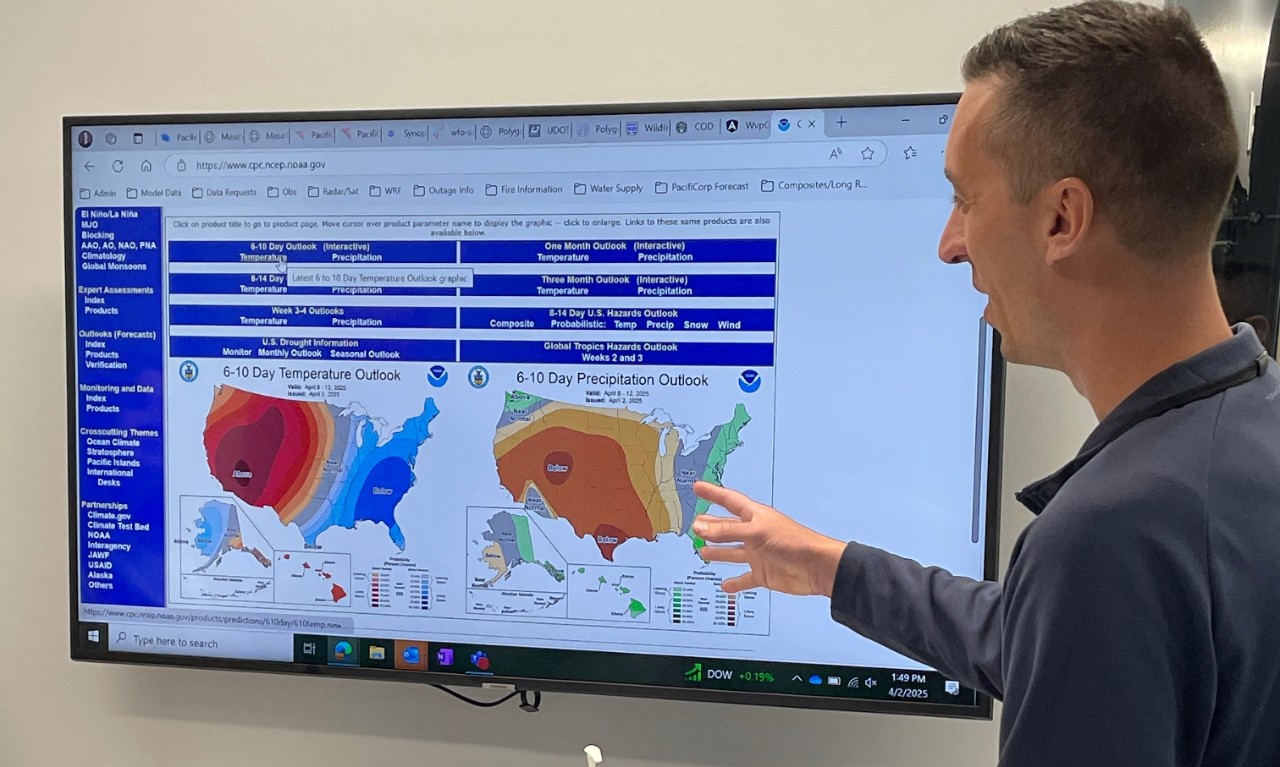
Outlooks from NOAA’s Climate Prediction Center and the National Interagency Fire Center indicate abnormally high temperature patterns with record low precipitation across the Great Basin. Combined with persistent drought and earlier than normal runoff, these trends are expected to increase wildfire risk across the region.
As part of Rocky Mountain Power’s ongoing wildfire mitigation efforts, the company is taking steps to protect communities with safety as the top priority. These include enhanced safety settings and protective equipment designed to automatically shut off power when lines come into contact with debris, wildlife or strong winds.
During periods of elevated risk, the company may also temporarily de-energize power lines to reduce the likelihood of ignition or help limit the spread of active fires.
These measures may lead to longer or more frequent outages for customers in some high-risk areas.
“We are preparing for an elevated wildfire season across our service area and taking proactive steps to reduce risk,” said Curt Mansfield, senior vice president of Rocky Mountain Power. “Working closely with our partners and encouraging customers to prepare now is critical to keeping our communities safe.”
Rocky Mountain Power monitors weather and wildfire conditions using more than 300 weather stations and advanced tools that track changing conditions and help guide operational decisions across its service territory.
The company’s wildfire mitigation efforts have received national recognition. A 2024 Stanford University study found PacifiCorp’s programs meet the highest standards in multiple states, reflecting a strong commitment to reducing wildfire risk and strengthening system resilience.
Customers can prepare for potential outages by ensuring their contact information is up to date to receive outage notifications, review backup power options and assemble an emergency kit.
More information is available at RockyMountainPower.net/Wildfire, UtahFireInfo.gov and BeReady.Utah.gov.